Fermented Basil Pesto
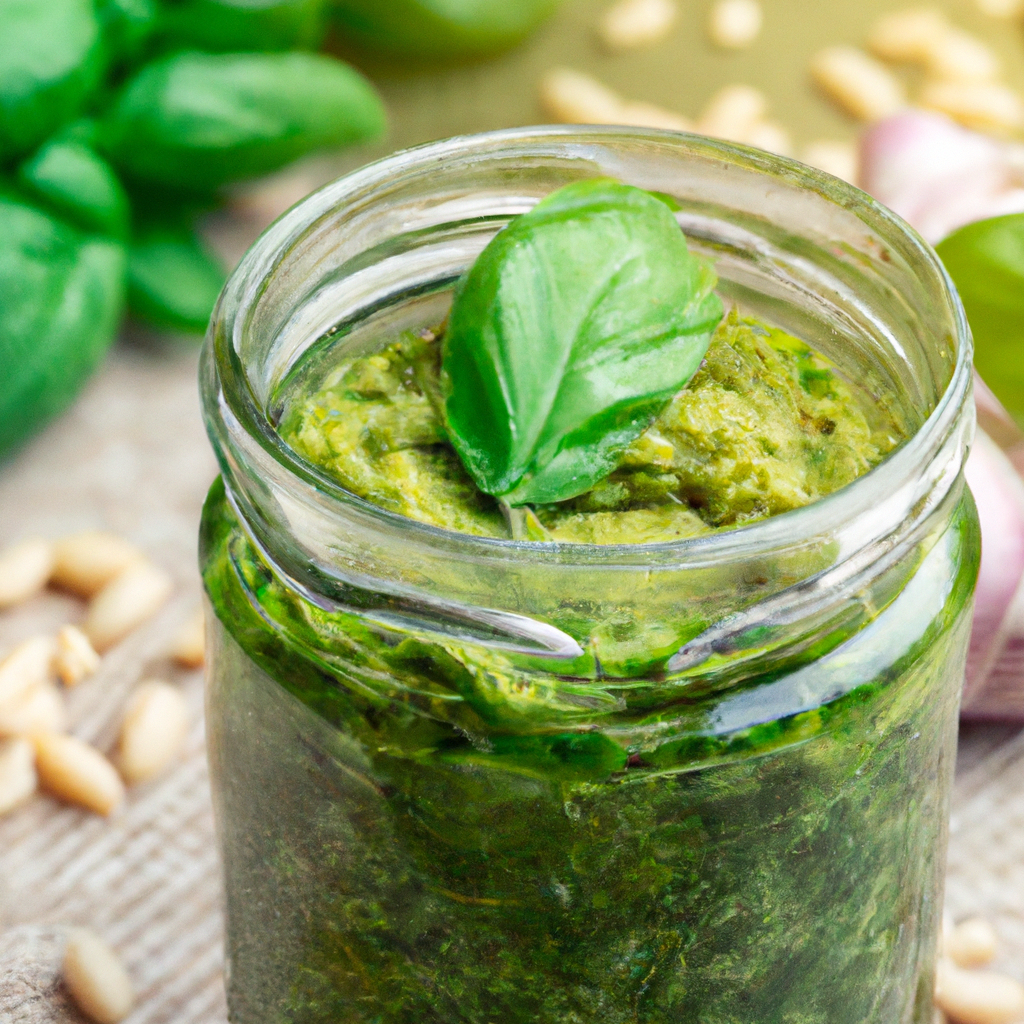
There's something truly magical about fermented foods, capturing the essence of summer and preserving it in a jar. In this recipe, we take the classic basil pesto to a new level by fermenting it, creating a delightful burst of flavor that will elevate your dishes to a whole new realm. Fermented Basil Pesto is not only delicious but also packed with gut-friendly probiotics, making it a wonderful addition to your kitchen repertoire.
Ingredients
Instructions
-
Wash the basil leaves and pat them dry with a paper towel. Make sure they are completely dry before proceeding.
-
In a food processor, combine the basil leaves, toasted pine nuts, minced garlic, Parmesan cheese, sea salt, and black pepper. Pulse until the ingredients are finely chopped and well combined.
-
With the food processor running, slowly drizzle in the extra-virgin olive oil until you reach your desired consistency. The pesto should be smooth and creamy.
-
Transfer the pesto to a clean glass jar, leaving some space at the top for expansion during fermentation.
-
Add the whey or salt to the top of the pesto and stir it gently to incorporate.
-
Seal the jar with a lid and let it sit at room temperature for 2-3 days to ferment. Check the pesto daily and press it down with a clean spoon to release any air bubbles.
-
After 2-3 days, taste the fermented basil pesto. If it has reached your desired level of tanginess, transfer it to the refrigerator to slow down the fermentation process. If you prefer a stronger flavor, you can let it ferment for an additional day or two.
-
Fermented Basil Pesto will keep in the refrigerator for up to 2 weeks. Serve it over pasta, spread it on sandwiches, or use it as a flavorful dip.
Nutrition Facts
Serving size: 1 tablespoon- Calories
- 180 kcal
- Total Fat
- 17 g
- Saturated Fat
- 3 g
- Cholesterol
- 5 mg
- Sodium
- 250 mg
- Total Carbohydrate
- 4 g
- Dietary Fiber
- 2 g
- Sugars
- 0 g
- Protein
- 4 g
Fermented Basil Pesto adds a zesty punch to any dish and brings a unique depth of flavor that can't be replicated. The fermentation process not only enhances the taste but also increases the nutritional value of the pesto, making it a winning combination. Enjoy this delightful creation and experiment with different ways to incorporate it into your meals. Whether you’re a seasoned fermenter or just starting on your fermentation journey, this recipe is sure to become a staple in your culinary arsenal.